


Table of Contents
Arsenic Water Testing & Removal in New Hampshire
Arsenic contamination affects roughly one in five private wells across New Hampshire, making it one of the most widespread water quality issues facing homeowners in the Granite State. This naturally occurring element leaches from bedrock into groundwater, creating health risks that many families don’t discover until routine testing reveals dangerous levels.
Unlike bacterial contamination that makes people sick immediately, arsenic poisoning happens slowly over years or decades of exposure. The tasteless, odorless nature of arsenic makes testing the only way to know if a household faces this silent threat.
Understanding why arsenic occurs so commonly in New Hampshire wells, how to test for it properly, and what treatment options work best helps homeowners make informed decisions about protecting their families from this serious health hazard.
Why Arsenic is Common in NH Bedrock
New Hampshire sits on granite bedrock that naturally contains arsenic-bearing minerals. Over geological time, groundwater flowing through fractured bedrock dissolves these minerals, carrying arsenic into the aquifers that supply private wells throughout the state.
The southeastern counties – Merrimack, Hillsborough, and Rockingham – show the highest arsenic occurrence, though elevated levels appear statewide wherever granite bedrock predominates. Well location, depth, and local geology all influence arsenic concentrations in individual wells.
Bedrock fracture patterns play a crucial role in arsenic contamination. Wells that intersect highly fractured bedrock often show higher arsenic levels because water has more contact with arsenic-bearing minerals as it moves through underground pathways.
Seasonal variations can affect arsenic concentrations as water table levels change throughout the year. Drought conditions sometimes concentrate arsenic levels as available water decreases, while heavy spring runoff may temporarily dilute contamination.
The natural origin of arsenic contamination means newly drilled wells can have dangerous levels immediately upon completion. Unlike contamination from human activities that spreads over time, geological arsenic has been present in bedrock for millions of years.
Federal regulations set the maximum allowable arsenic level at 10 parts per billion (ppb), but health experts increasingly recommend treatment for levels above 5 ppb due to cumulative health effects. Many New Hampshire wells test between 15-50 ppb, requiring immediate treatment to meet safety standards.
Testing and Speciation
Proper arsenic testing involves more than simply measuring total arsenic concentration. Laboratory analysis must also determine which chemical forms of arsenic are present, because treatment effectiveness depends on the specific type of arsenic contamination found.
Arsenic exists in several chemical forms in groundwater, with inorganic arsenic being the most toxic and common form found in New Hampshire wells. Arsenate (As-V) and arsenite (As-III) represent the two primary inorganic forms, each requiring different treatment approaches for optimal removal.
Sample collection follows EPA-approved protocols using special containers and preservation methods. Contamination during sample collection can easily skew results, making proper sampling technique critical for accurate analysis.
Laboratory analysis typically takes 5-7 business days and should include both total arsenic concentration and speciation analysis for wells exceeding 10 ppb. Understanding the specific forms present guides treatment system selection and design.
Additional water chemistry testing accompanies arsenic analysis to identify factors that influence treatment performance. Parameters like pH, iron concentration, phosphate levels, and manganese all affect how different treatment technologies remove arsenic from water.
Professional interpretation of test results helps homeowners understand their specific health risks and treatment urgency. Arsenic levels above 50 ppb require immediate action, while lower levels allow time for careful treatment system selection and installation planning.
Best-Fit Treatment Options
Reverse osmosis systems provide the most reliable arsenic removal for residential applications, effectively reducing both arsenate and arsenite forms to below detectable limits. Point-of-use RO systems treat water at kitchen sinks for drinking and cooking while maintaining household water pressure.
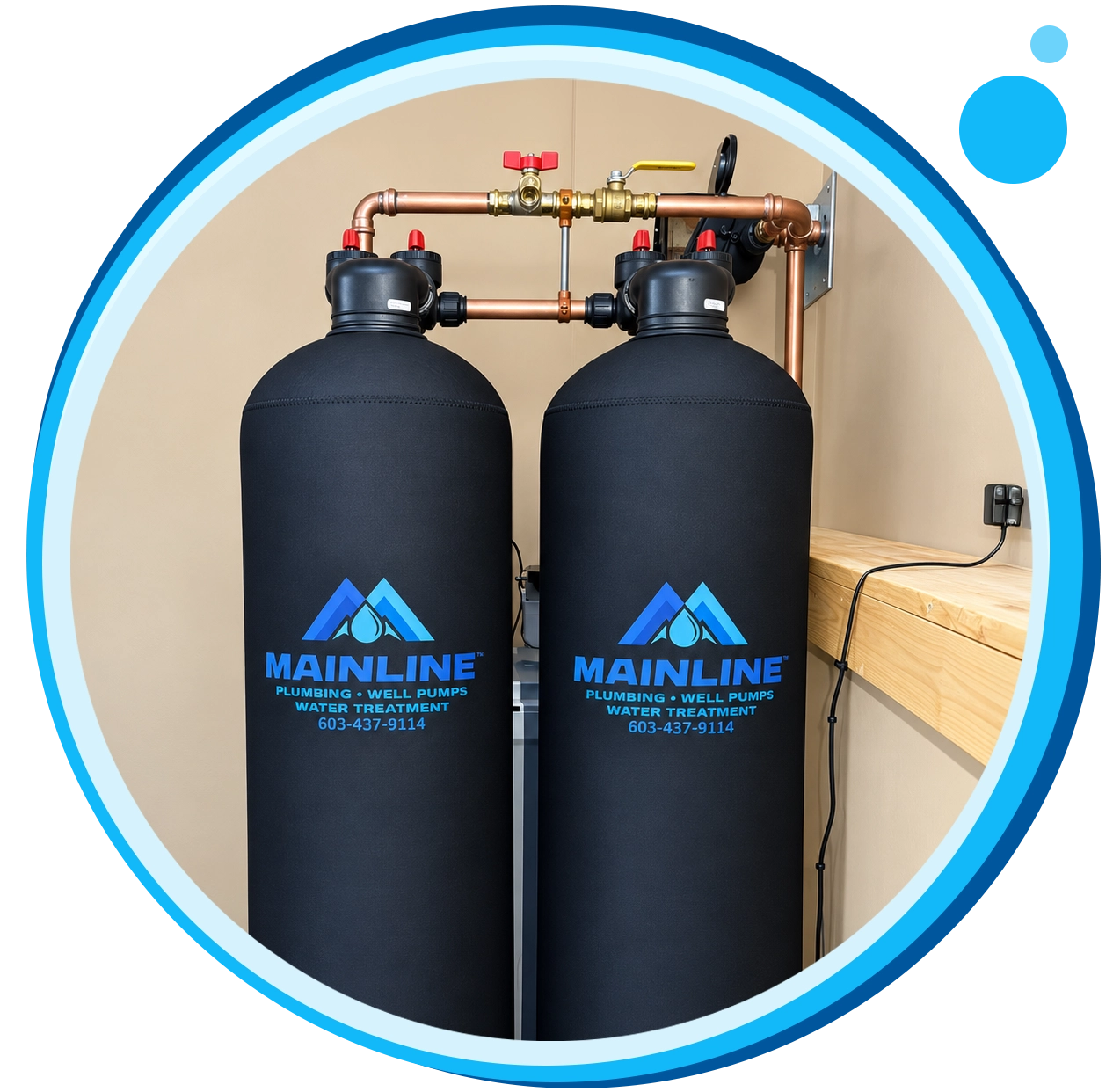
Adsorption media systems offer whole-house arsenic treatment using specialized iron-based media designed specifically for arsenic removal. These systems provide consistent performance throughout the media life cycle without producing the wastewater associated with RO systems.
Ion exchange systems effectively remove arsenate but require pre-oxidation to convert arsenite to the more easily removed arsenate form. These systems work best for wells with primarily arsenate contamination and provide high treatment capacity with minimal maintenance.
Oxidation-filtration systems combine chemical oxidation with specialized media to remove both arsenic forms along with iron and manganese commonly found in New Hampshire wells. This comprehensive approach addresses multiple contamination issues with a single treatment system.
Treatment system sizing depends on household water usage, arsenic levels, and the presence of other contaminants that might interfere with arsenic removal. Undersized systems may not provide adequate treatment, while oversized systems waste money and energy.
Performance monitoring through regular testing ensures continued arsenic removal effectiveness over time. Media exhaustion, system malfunctions, or changing water conditions can reduce treatment performance, making ongoing verification essential for family safety.
Pricing Transparency and Warranties
Point-of-use reverse osmosis systems for arsenic removal typically cost $1,200-2,000 installed, providing treated water for drinking and cooking needs. These systems include professional installation, initial testing, and comprehensive warranty coverage.
Whole-house treatment systems range from $2,500-4,500 depending on system type, capacity requirements, and installation complexity. Pricing includes all necessary components, professional installation, permits, and initial system commissioning.
Annual operating costs vary by system type and contamination levels. RO systems require membrane and filter replacements costing $200-300 annually, while adsorption media systems need media replacement every 2-3 years at $400-600 per service.
Warranty coverage includes 5 years on system components and 2 years on installation workmanship. Extended warranty options provide additional protection for major system components and annual maintenance services.
Financing options include 0% interest programs for qualified customers and payment plans that spread system costs over 12-36 months. Transparent pricing eliminates hidden fees, surprise charges, or pressure tactics that some companies use.
Schedule a certified water test today – Contact Mainline Water Systems for professional arsenic testing and proven treatment solutions that protect your family’s health.
Frequently Asked Questions
Annual testing monitors arsenic levels in untreated wells and verifies treatment system performance for homes with installed systems. More frequent testing may be necessary if levels approach treatment thresholds or if system problems develop.
Boiling concentrates arsenic levels as water evaporates, making contamination worse rather than better. Only specialized treatment systems can effectively remove arsenic from drinking water.
Children face higher risks from arsenic exposure due to their smaller body size and developing organ systems. Pediatric health experts recommend treating any detectable arsenic levels in water consumed by children.
Properly installed arsenic treatment systems provide immediate protection upon startup. Verification testing within 48 hours of installation confirms effective arsenic removal and system performance.
Written By Mainline Plumbing
When something goes wrong with your water, the cause isn’t always obvious. It could be your plumbing, well system or the water itself. Mainline has the experience to look at the whole picture, identify the problem and recommend the right solution.
Concerned About PFAS?