


Table of Contents
PFAS Water Testing & Treatment in New Hampshire
Five years ago, most New Hampshire homeowners had never heard the term PFAS. Today, it’s become one of the biggest concerns for families relying on private wells. These “forever chemicals” have contaminated groundwater throughout the Granite State, leaving thousands of households wondering if their drinking water is safe.
PFAS contamination in New Hampshire isn’t a minor issue – the state faces some of the highest levels in the entire country. From former military installations to industrial sites that used firefighting foam for decades, contamination sources span from the seacoast to the Connecticut River Valley.
The reality is stark but manageable. While PFAS contamination poses serious health risks, proven treatment technologies can effectively remove these chemicals from residential water supplies. Understanding the scope of contamination, testing requirements, and treatment options helps homeowners make informed decisions about protecting their families.
Why PFAS Matters in NH
New Hampshire’s PFAS contamination problem stems from decades of industrial and military use of chemicals that seemed harmless at the time. Pease Air Force Base, Manchester Airport, and various industrial facilities used PFAS-containing firefighting foam extensively, not knowing these chemicals would persist in groundwater indefinitely.
The numbers tell a troubling story. Over 60 New Hampshire communities have detected PFAS levels above state safety standards. Areas around former military bases show particularly high contamination, but the chemicals have spread far beyond their original sources through groundwater flow.
PFAS chemicals don’t break down naturally – that’s why scientists call them “forever chemicals.” Once they enter groundwater, they remain there permanently unless actively removed. Even worse, they accumulate in human tissue over time, meaning small daily exposures can build up to dangerous levels over months and years.
Health impacts associated with PFAS exposure include increased cancer risk, liver damage, weakened immune systems, and developmental problems in children. Pregnant women face additional risks, as these chemicals can affect fetal development. The cumulative nature of PFAS toxicity makes immediate action crucial for affected households.
Geographic distribution of contamination follows predictable patterns around known sources, but groundwater flow has carried PFAS chemicals into unexpected areas. Wells several miles from obvious contamination sources have tested positive, highlighting the importance of testing regardless of proximity to known PFAS sites.
How PFAS Testing Works
PFAS testing requires specialized laboratory analysis that differs significantly from standard water tests. These chemicals exist at extremely low concentrations – measured in parts per trillion – requiring sensitive analytical equipment and precise handling procedures.
Sample collection follows strict EPA protocols to prevent contamination during the testing process. Special sample containers, preservation methods, and chain-of-custody procedures ensure accurate results. Improper sampling techniques can easily contaminate samples or provide false readings.
Laboratory analysis uses liquid chromatography-mass spectrometry (LC-MS) to identify and quantify individual PFAS compounds. A comprehensive PFAS panel tests for approximately 30 different chemicals, though New Hampshire has established regulatory limits for only four compounds: PFOS, PFOA, PFNA, and PFHxS.
Test results typically return within 7-10 business days and include detailed concentration levels for each detected compound. Professional interpretation helps homeowners understand which chemicals exceed state limits and the relative health risks associated with their specific contamination profile.
Cost considerations make PFAS testing more expensive than routine water analysis. Comprehensive PFAS panels range from $400-500, reflecting the sophisticated laboratory equipment and expertise required for accurate analysis at such low detection limits.
Proven Treatment Options for PFAS
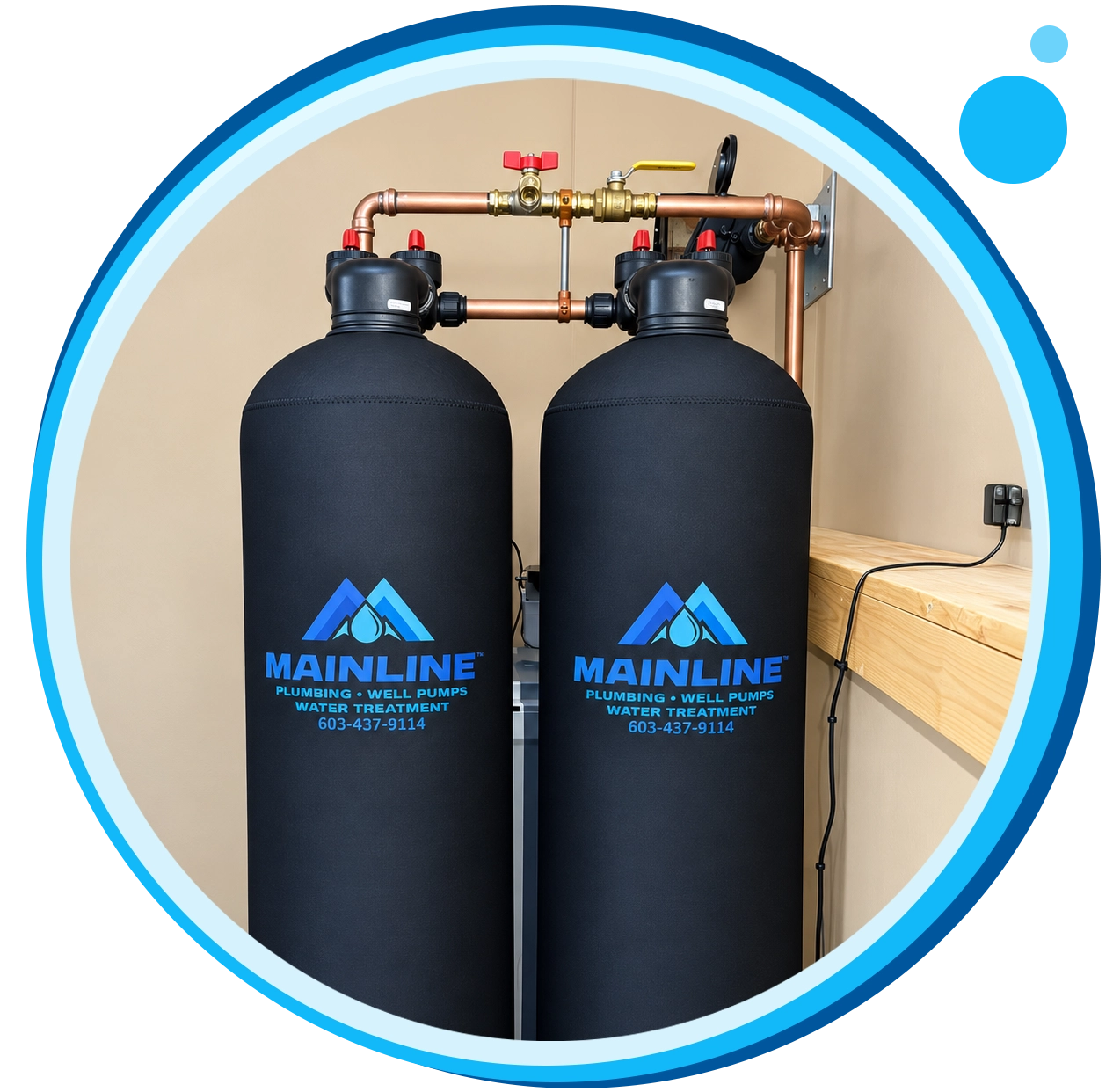
Granular activated carbon (GAC) systems provide the most common residential treatment for PFAS contamination. However, standard carbon media doesn’t effectively remove PFAS chemicals – specialized carbon designed specifically for these compounds is essential for reliable treatment performance.
Whole-house GAC systems treat all water entering the home, providing comprehensive PFAS removal for drinking, cooking, and bathing. These systems typically cost $3,500-4,500 installed, with annual media replacement costs of $300-400 depending on contamination levels and water usage.
Reverse osmosis (RO) systems offer the highest PFAS removal efficiency, eliminating virtually all detected compounds. Point-of-use RO systems treat water at individual taps, providing maximum protection for drinking and cooking while maintaining household water pressure and flow rates.
Ion exchange systems present another effective option, particularly for specific PFAS compounds that carbon may not capture efficiently. These systems exchange PFAS ions for harmless chloride ions, providing consistent removal performance throughout the media service life.
System selection depends on contamination levels, specific PFAS compounds present, household water usage, and budget considerations. Higher contamination levels may require more aggressive treatment technologies, while moderate contamination often responds well to specialized carbon filtration.
Performance verification through before-and-after testing ensures treatment systems effectively remove the specific PFAS compounds in each home’s water supply. Generic treatment approaches often fail because PFAS contamination profiles vary significantly between wells.
NH PFAS Rebate Program: Who Qualifies and How to Apply
New Hampshire’s PFAS Removal Rebate Program provides substantial financial assistance for affected homeowners, covering up to $4,000 toward treatment system installation. The program, funded through legal settlements with PFAS manufacturers, recognizes that homeowners shouldn’t bear the full cost of contamination they didn’t create.
Eligibility requires water test results showing PFAS contamination above state maximum contaminant levels. Qualifying thresholds are: PFOS above 12 ppt, PFOA above 12 ppt, PFNA above 11 ppt, or PFHxS above 18 ppt. Homes exceeding any single threshold qualify for rebate assistance.
The rebate covers 50% of eligible treatment system costs, including equipment, installation, permits, and initial performance testing. Both primary residences and rental properties qualify if they rely on private wells for drinking water supply.
Application procedures require pre-approval before beginning any system installation. The process includes submitting water test results, obtaining quotes from licensed installers, completing application forms, and providing property ownership documentation. Pre-approval typically takes 30 days from complete application submission.
Installation must occur within 90 days of pre-approval using approved equipment and licensed contractors. Post-installation requirements include final documentation submission, performance testing results, and detailed receipts for all eligible expenses.
The rebate payment process concludes 6-8 weeks after final documentation submission. Working with experienced installers familiar with rebate requirements significantly reduces approval delays and documentation problems that can slow rebate payments.
Why Choose Mainline
Fifteen years of New Hampshire water treatment experience provides unique insights into the state’s diverse contamination challenges. Local expertise helps match treatment solutions to specific regional water conditions and contamination patterns found throughout different areas of the state.
EPA certification for PFAS testing and New Hampshire contractor licensing ensure compliance with all regulatory requirements for testing and treatment system installation. Ongoing technical training keeps staff current with evolving PFAS treatment technologies and regulatory changes.
Local parts inventory and service capacity minimize system downtime when maintenance becomes necessary. Stocking replacement media and components locally ensures quick response times for existing customers who need service or repairs.
Comprehensive rebate assistance includes application preparation, documentation management, and communication with state agencies throughout the approval process. Experience with over 200 successful rebate applications provides insights that help homeowners avoid common pitfalls and delays.
Performance monitoring includes detailed before-and-after testing to verify treatment effectiveness and establish maintenance schedules based on specific contamination levels and household usage patterns. Data-driven maintenance approaches optimize system performance while minimizing operating costs.
Schedule your free water consultation today – Contact Mainline Water Systems for comprehensive PFAS testing and treatment solutions designed specifically for New Hampshire families.
Frequently Asked Questions
Annual testing monitors treatment system performance and verifies continued PFAS removal effectiveness. More frequent testing may be warranted if contamination levels were initially very high or if treatment system problems develop.
Most standard homeowner’s insurance policies exclude coverage for water treatment equipment. However, the state rebate program significantly reduces out-of-pocket expenses for qualifying households.
GAC systems need media replacement every 12-18 months depending on contamination levels and usage. RO systems require membrane replacement every 2-3 years plus regular pre-filter changes every 3-6 months.
The state rebate program requires professional installation by licensed contractors. Professional installation also ensures optimal performance, warranty coverage, and compliance with local plumbing codes.
Written By Mainline Plumbing
When something goes wrong with your water, the cause isn’t always obvious. It could be your plumbing, well system or the water itself. Mainline has the experience to look at the whole picture, identify the problem and recommend the right solution.
Concerned About PFAS?